

Press Release
Hyundai E&C Demonstrates Technological Excellence in “Shoulder Season Special Concrete”
■ Hyundai E&C Partners with Sampyo Industry to Develop Specialized Concrete for Construction During Shoulder Seasons
■ Rapid-Hardening Slag Cement and Specialized Admixtures Enable Concrete to Achieve Early Strength Without Additional Thermal Curing
■ Field Trials at Major Residential Developments Confirm Workability and Performance, Paving the Way for Shorter Construction Schedules, and More Efficient On-Site Management
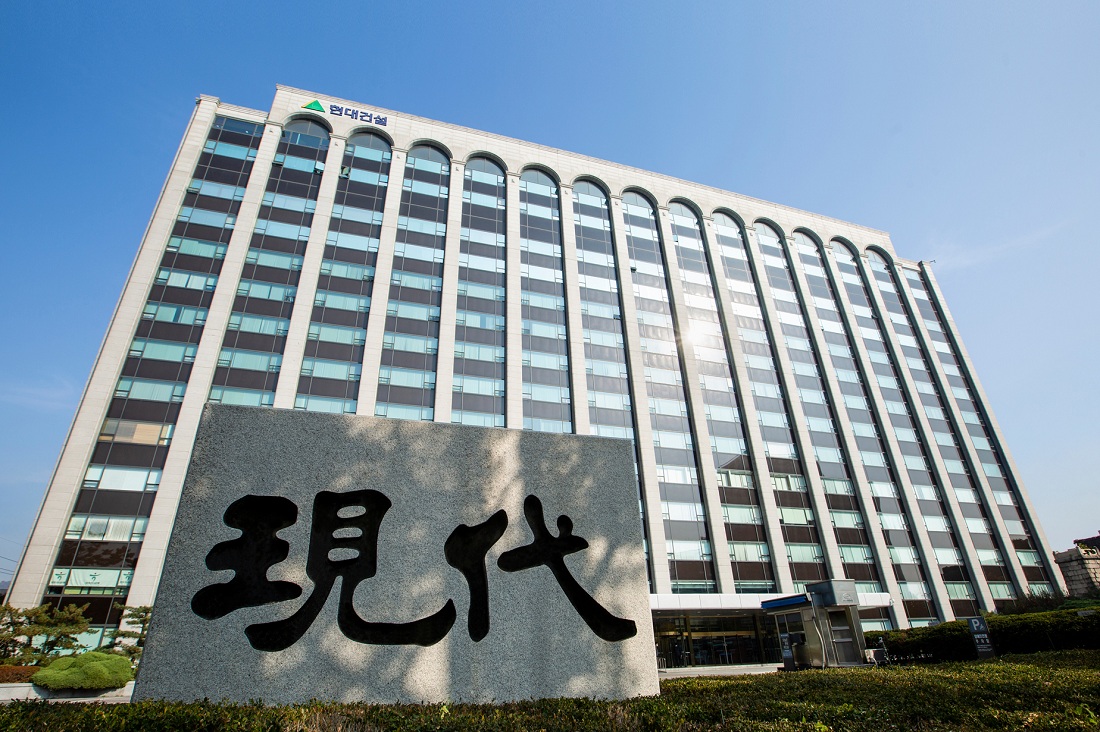
Hyundai E&C Head Office Image
Hyundai E&C said on Wednesday, October 28, that it had received technology certification from the Korea Concrete Institute for its “shoulder-season special concrete,” developed to ensure consistent quality even under construction conditions typically encountered during the shoulder seasons.
The institute’s certification program relies on expert review to verify the performance of concrete materials and construction techniques, as well as their practicality on job sites. The certification recognizes the strength of a quality-assurance technology that can respond to seasonal shifts in conditions, one built on the research and development expertise Hyundai E&C has accumulated in high-performance concrete.
Quality control requires particular attention during the shoulder seasons, when wide daily temperature fluctuations and low temperatures can delay concrete strength development. To ensure that concrete reliably achieves its design strength even in low-temperature conditions, higher strength standards are generally applied than for conventional concrete. However, this practice has traditionally increased costs due to greater cement consumption and placed additional burdens on on-site management.
The HMG Construction Technology Research Institute, the integrated research and development organization of Hyundai E&C and Hyundai Engineering, has jointly developed specialized concrete for the shoulder seasons with Sampyo Industry to address these challenges. The technology uses high-strength slag cement, which provides better early strength development than conventional slag cement, along with performance-enhanced admixtures. It is designed to consistently achieve a compressive strength of at least 5 MPa (megapascals) within 48 hours, even when the daily minimum outdoor temperature falls to -2°C and the daily temperature range does not exceed 20°C. Notably, the concrete can meet the required performance standards without additional thermal insulation during curing or an increase in design strength, a development expected to improve quality, enhance construction efficiency and reduce the burden of on-site management.
In March this year, Hyundai E&C successfully validated the technology through on-site applications at “The Parkside Seoul” and “THE H Banpo 124” projects. The concrete reliably reached the strength needed for formwork removal within 48 hours of pouring, and 28 days after pouring, its compressive strength exceeded the quality standard. The concrete also demonstrated excellent workability throughout construction, confirming its ability to maintain consistent quality under shoulder-season conditions.
An official from the HMG Construction Technology Research Institute said, “This technology certification formally recognizes the superior technical capabilities and practical applicability of our specialized concrete for the shoulder seasons,” adding, “We expect its ability to maintain consistent quality even under low-temperature conditions to enhance structural safety, shorten construction schedules and improve on-site management efficiency.”
Meanwhile, the HMG Construction Technology Research Institute is strengthening its research and development capabilities in four core areas, △energy △future housing △smart construction △infrastructure, as part of its efforts to secure future growth engines. The institute is also focusing on developing AI-based technologies and management systems to improve the performance and quality of concrete, a key construction material.
